 Cinematographer John Matysiak (“Old Henry,” “Winning Time,” “Big George Foreman”) brings a vivid breathlessness to the near-wordless film “Motor City.” An action-packed visual feast, “Motor City” is a neon-streaked tale pulled from the underbelly of a mythologized 1970s Detroit. Starring Alan Ritchson, Ben Foster, and Shailene Woodley, the movie combines a 35mm 70s aesthetic and the kinetic energy of the era’s grindhouse films, making for a nonstop ride. To create the look of “Motor City,” Matysiak focused on lighting that was period-real—from aping the imperfections of old fixtures to pairing Astera Tubes with VFX to bring big neon sign set pieces to life.
Watching “Motor City” is a uniquely adrenaline-spiking experience. With under a dozen lines of dialogue in the entire film (and those limited to short sentence fragments that extend from physical outbursts), the cinematography and the sound design are at the wheel. The movie is poetic, violent, and emotional—without dialogue, scenes and sequences come across like vivid memories, tactile and emotive without specifics of ‘he said’ or ‘she said.’ Setting out to build such a stylistically ambitious film required considerable prep from Matysiak and director Potsy Ponciroli.
“We asked ourselves, ‘how do we represent that 1970s era in a way that feels authentic and grounded, given these larger-than-life characters?’” explains Matysiak. Although set in Detroit, the film was predominantly shot in New Jersey, but the cinematographer knew that nailing that heightened ‘motor-city-ness’ of the world was essential to establishing compelling drama in the film. The team chose to shoot (often in slow motion) on Alexa 35 with Master Anamorphics combined with a lighting style that leaned into color and contrast, playing with the look of neon and multi-colored gas-discharge lamps.
Lighting a Neon Night
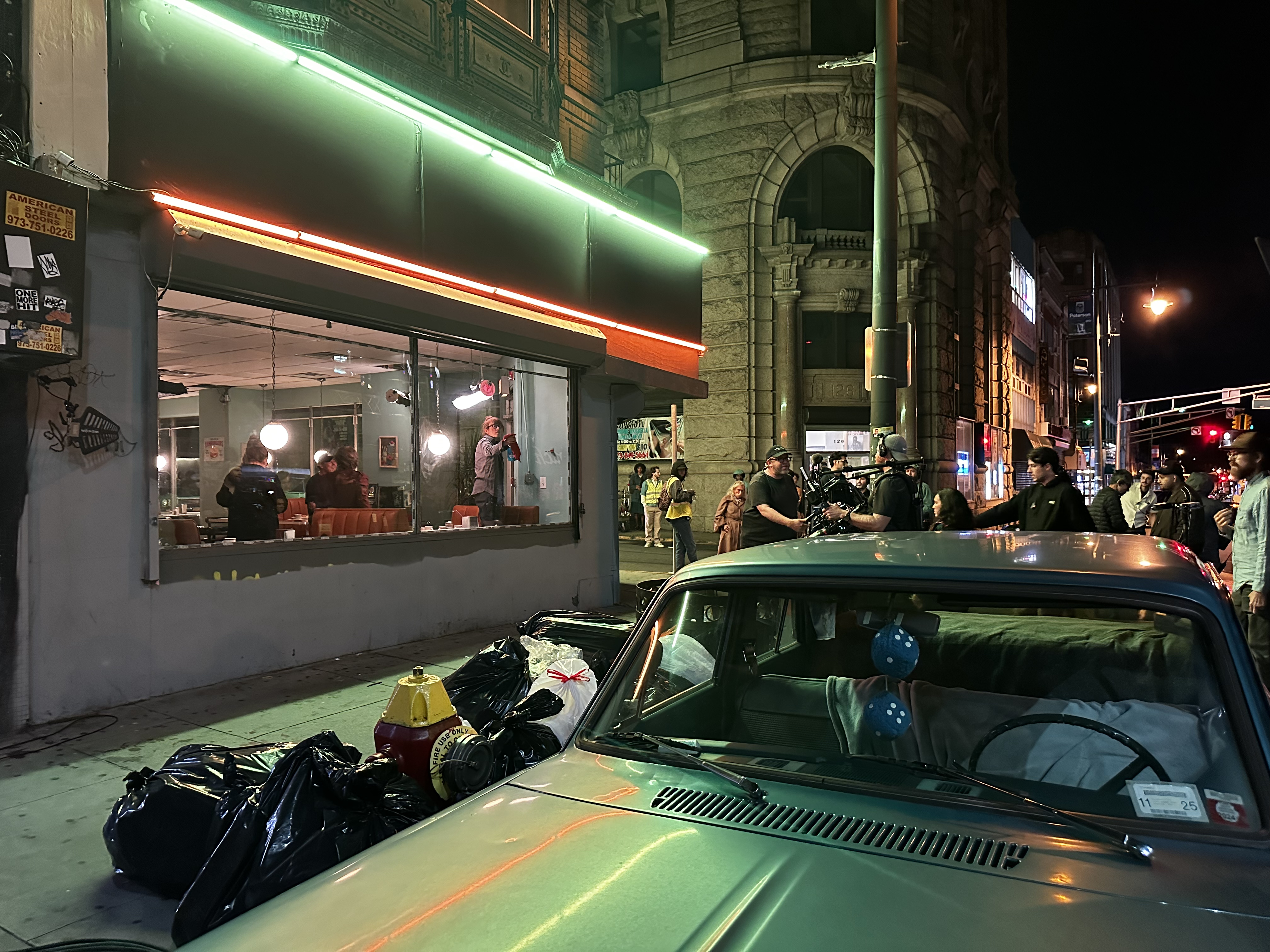
“We wanted the images to feel like they could come from a graphic novel,” admits the cinematographer. “While location scouting, gaffer Jason Velez and I looked for places that seemed like they would organically have a neon sign. Then we’d use a combination of Astera Tubes, either actually building them into the set via the production design, or if we planned a VFX lighting element placed somewhere, we would use the output of the Tubes to light our subjects, streets, and reflections. Then in post, the actual fixtures themselves would be replaced by period-accurate neon signs.”
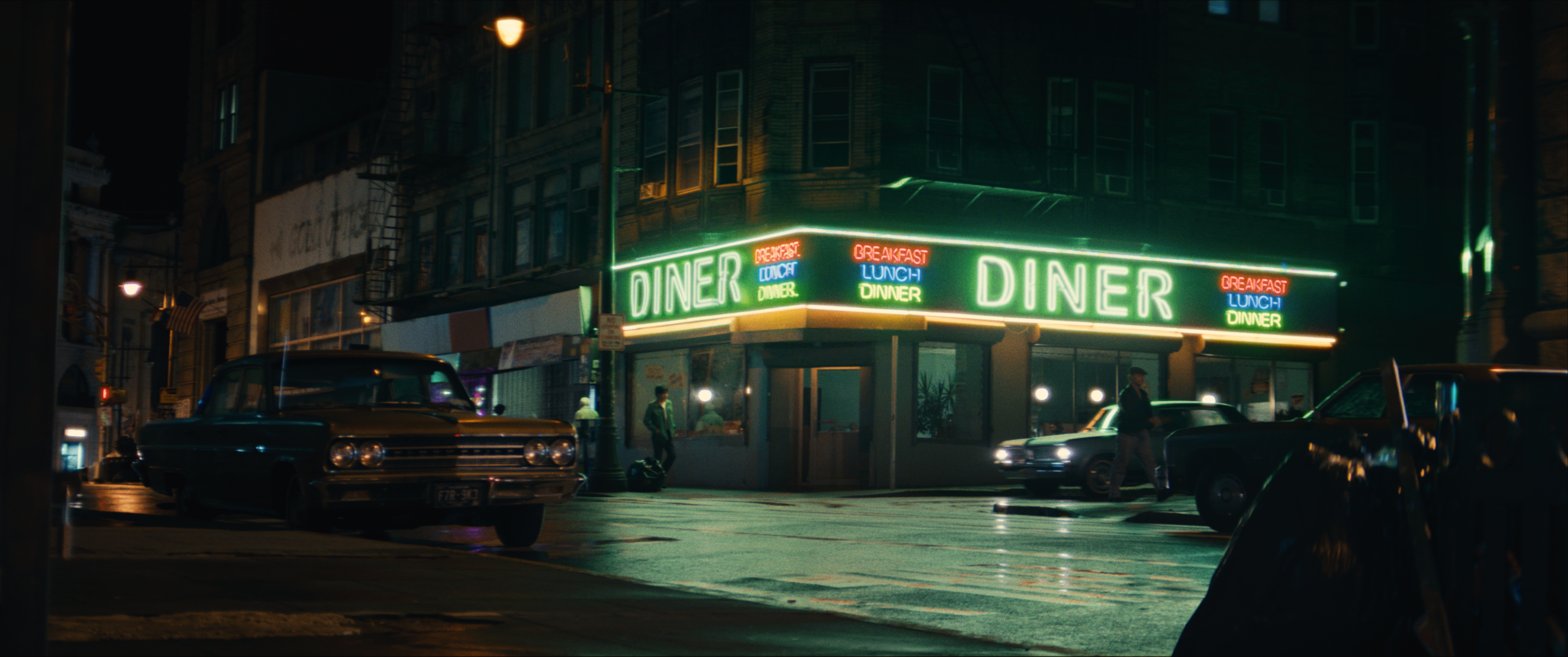
The Tube/VFX combo is pulled off seamlessly across several major set pieces. The diner where Sophia (Woodley) works boasts a huge green-and-orange “Diner” sign over big open windows, allowing the scene to be viewed from both inside and out. The diner is home to a pivotal sequence where Reynolds (Foster) wins back Sophia, taking advantage of the financial distress she’s fallen into since her fiancé, John Miller (Ritchson), was wrongfully arrested. The sign is a prominent, vivid element of the shot, draping the exterior in muddy green—but it doesn’t actually exist! The production used Astera Hyperion Tubes, tuned to green and orange, to line a three-foot-tall strip above the windows. “We tried some different colors until we found a combination which we really liked. I knew I could work backwards from the orange and green light and reflections and build that into the VFX sign itself,” Matysiak explains.
Astera loaded practical lighting supplemented by VFX was the lynchpin of some of “Motor City’s” other most striking moments—including the neon red rooftop “Lager” billboard that illuminates the film’s opening action sequence.
Fluorescent Replacements
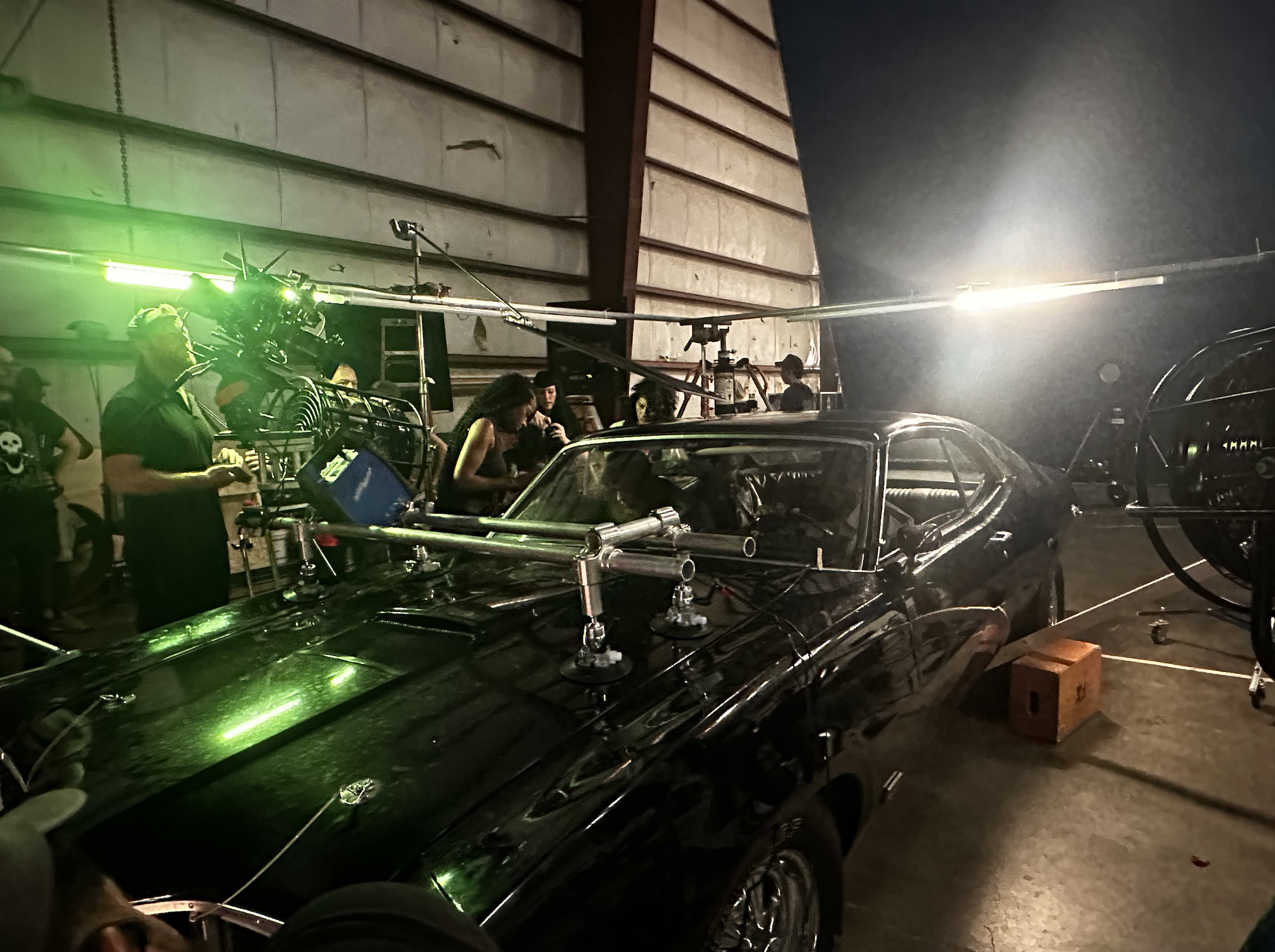
“We spent a lot of time watching films from the 1970s, trying to understand not just what the sources were, but how they behaved,” describes Matysiak. “Older sources have inconsistencies… Practically, Astera gave us a way to recreate a lot of those imperfect effects. The paradox is that we then used some of the most precise lighting technology available to recreate a world that was much less precise.”
That paradox is illustrated during the film’s interrogation-room sequence. Following his false arrest, John is brought handcuffed into the room and sentenced to 25 years in state prison for drug trafficking. He is watched through a one-way mirror by Sophia, who, in one of the film’s few spoken lines, screams that she loves him before throwing her engagement ring to the floor. John, left spotlighted and forsaken by an unjust system, is then visited by Reynolds, there to rub salt in the wound.
“We wanted to try and be authentic to how we would have made a film in the ’70s, and that extended to the lighting,” explains Matysiak. “For the interrogation, we replaced the overhead fluorescent bank with Titan Tubes and augmented that with small practical lights in the corners.” The result portrays John like a trapped animal in a gritty, sterile room, a carefully designed pool of light keeping Reynolds’s identity hidden until the moment he steps forward to deliver the final blow.
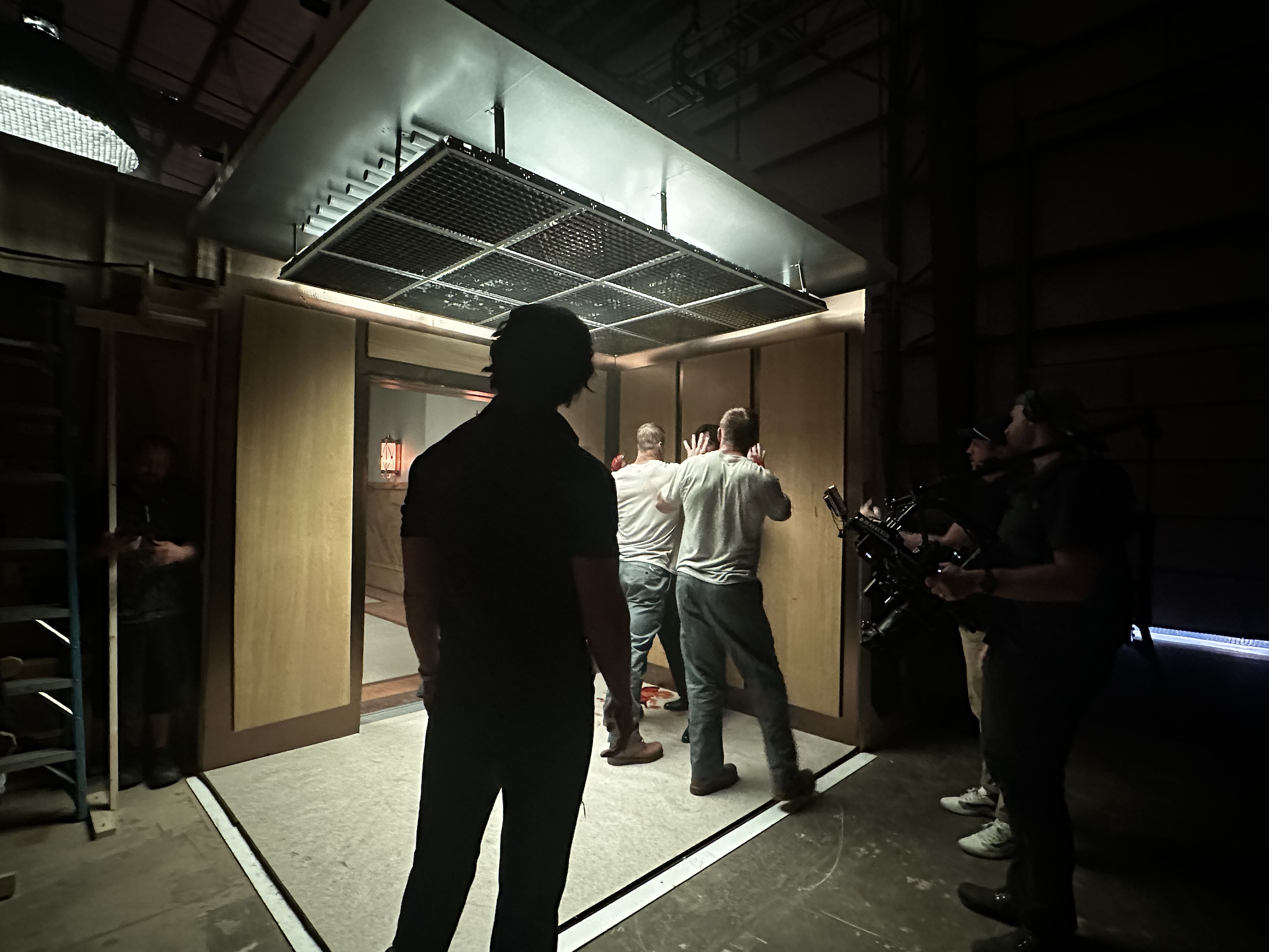
“From the beginning, we knew we wanted the flexibility and control that Astera gives you. That’s really the advantage—it’s not only the quality of the light, but also being able to make those intuitive decisions right up until we roll. We were able to refine the lighting over and over again up until the camera rolled. It gives you more choices.” Matysiak points to the elevator fight sequence, near the climax of the film. The elevator set was built to be bloodied and destroyed, with multiple Hyperion Tubes mounted overhead to light the space. “On a film like this, it was really important to have that across all fixtures, not just the ‘neon’-style lights.”
**
“Motor City” is a masterful, adrenaline-fueled action film, with brilliant performances from Woodley, Ritchson, Foster, and the entire cast that makes a meal out of acting without words. The cinematography is the silent hero of this nearly silent film, with each frame and composition responsible for conveying the story. Filled with punchy colors and contrast, the film uses lighting immaculately to build the world.
“Motor City” is available to stream on Amazon Prime.
Learn more about Astera: https://astera-led.com/
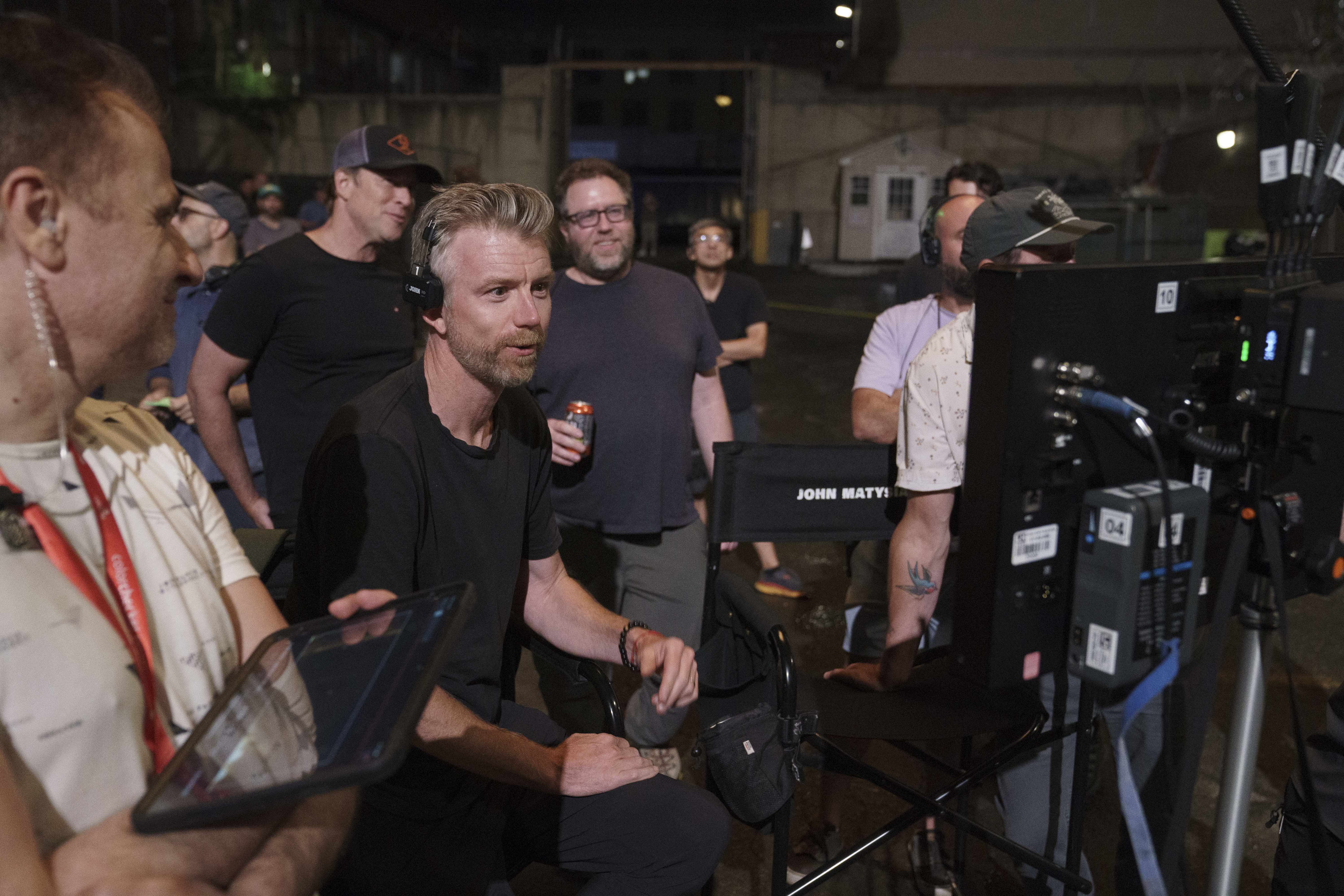
John Matysiak